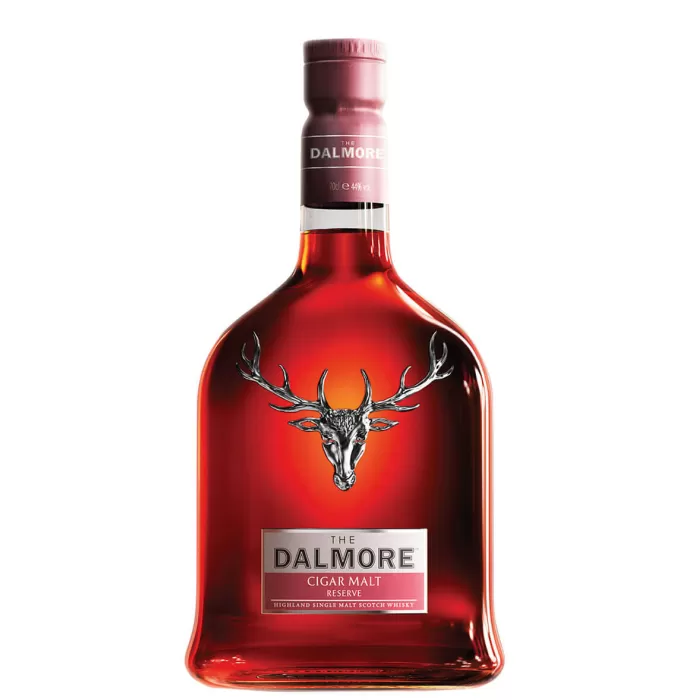
Dalmore Cigar Malt
70cl
/
44% Vol
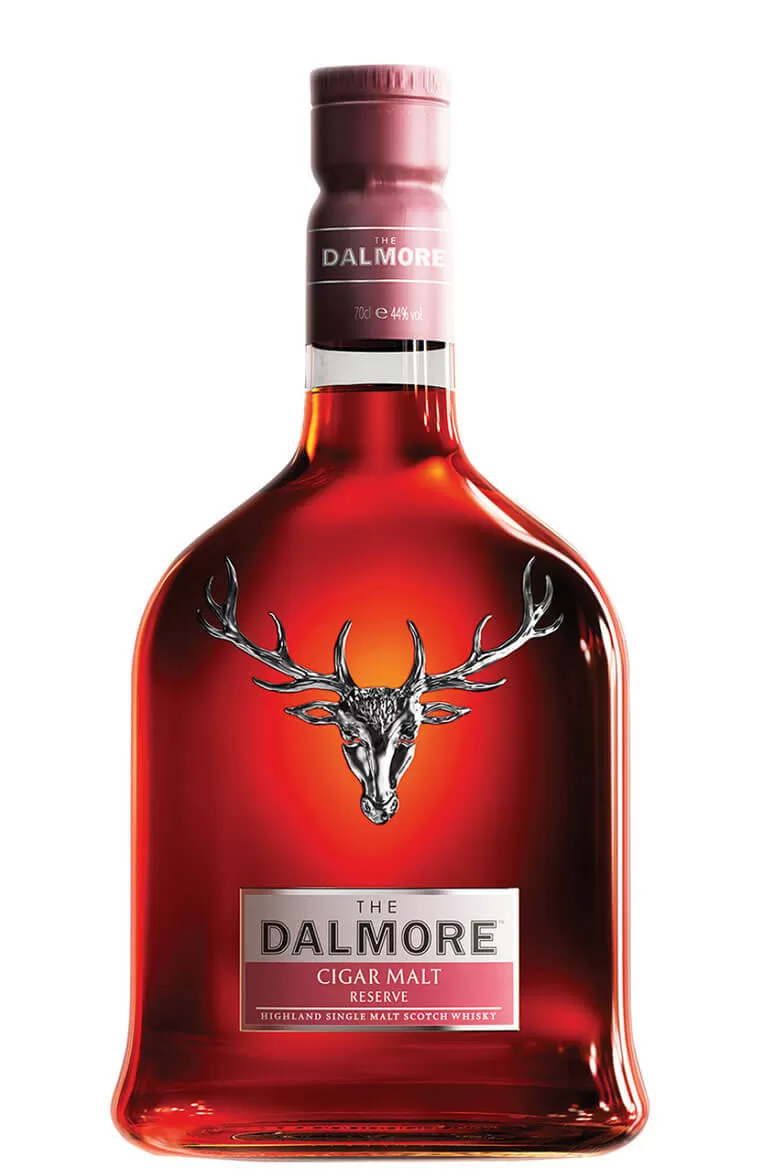
A big and bold single malt that is designed to be partnered with a cigar of a similar character. This is packed with flavours of chocolate biscuits, caramel, orange, cinnamon, clove and burnt sugar. If you don't smoke then it is also excellent on its own, or perhaps with some top quality chocolate.
See product details
Dalmore Cigar Malt
€126.00
Ex Tax: €102.44
All online sales are securely processed and can be made by either Visa or Mastercard. You can choose to pay in Euro, US Dollars or British Pounds.
Product Details
Tasting Notes from the Producer
Aromas (without water)
Cinnamon, vanilla and red fruits
Flavour
Tropical fruits, banana toffee and vanilla ice cream
Fact Sheet
Fluid
70cl
Alcohol %
44%
Types of Barrel used for Aging
Not specified, but there are bound to be some first-fill sherry casks used for most of this vatting.
Country
Scotland
Region/AOC
Highland
Awards and/or Press Quotes
Awards and/or Press Quotes
Gold - Single Malt No Age Statement - 2017 - International Spirits Challenge
Silver - Distillers' Single Malts 12 years and under - 2014 - International Spirits Challenge
Silver - Scotch Single Malt - Highland - 2017 - International Wine & Spirit Competition
FAQs
Yes, and the result has its own official classification. When single malts from two or more distilleries are vatted together, the product becomes a blended malt. The single malt designation requires one distillery, one grain: malted barley, distilled in copper pot stills. Compass Box built an entire portfolio on the blended malt category, proving it is a serious craft in its own right.
No. Scotch whisky is produced in five legally defined styles: single malt, single grain, blended malt, blended grain, and blended Scotch. Blended Scotch, which combines single malt and single grain from multiple distilleries, accounts for the vast majority of all Scotch sold globally. Single malt, made from 100% malted barley at a single distillery, represents a minority of total Scotch production by volume, though it commands significant attention and premium pricing in the international market.
Single malt Scotch whisky is made from 100% malted barley at a single Scottish distillery, distilled in traditional copper pot stills, and aged for a minimum of three years in oak casks in Scotland. The legal definition under Scotch Whisky Regulations does not restrict single malt to a single cask or a single year of production: blending of multiple casks from one distillery is both permitted and standard practice for maintaining a consistent house style across releases.
Single malt is a subcategory of Scotch. All single malt Scotch is Scotch, but not all Scotch is single malt. Scotch whisky encompasses five styles: single malt, single grain, blended malt, blended grain, and blended Scotch. Single malt is the most prestigious category for collecting and sipping, defined by a single distillery origin and 100% malted barley mash bill. Blended Scotch, combining malt and grain whiskies from multiple distilleries, accounts for over 90% of all Scotch sold globally.
You can order single malt Scotch online here at Celtic Whiskey Shop with nationwide delivery across Ireland and international shipping available. We stock an extensive range of single malts from all Scottish regions including Speyside, Islay, Highland, Lowland, and Island distilleries, from accessible standard expressions to rare and collectible bottles. Prefer to browse in person? Visit us at 27 28 Dawson Street, Dublin 2, open 7 days.
Single malt production begins with malting barley, germinating it to activate enzymes, then drying it in a kiln. The malt is milled, mashed with hot water to extract fermentable sugars, fermented with yeast for 48 to 100 hours, and then double distilled in copper pot stills. The new make spirit is filled into oak casks at a maximum of 63.5% ABV and matured for a minimum of three years in Scotland. Cask type, distillery character, and maturation conditions determine the finished flavour.
Single malt whiskey with an 'e' refers to Irish single malt, made from 100% malted barley in pot stills in Ireland, triple distilled as a rule. Single malt whisky without an 'e' refers to Scotch single malt, typically double distilled. Beyond the spelling, the production differences include triple versus double distillation, different yeast strains, and in Scotch, the permitted use of peated malt as a standard production practice. Irish single malt tends toward a lighter, fruitier, and less smoky profile.
Customer Reviews
Customer Reviews
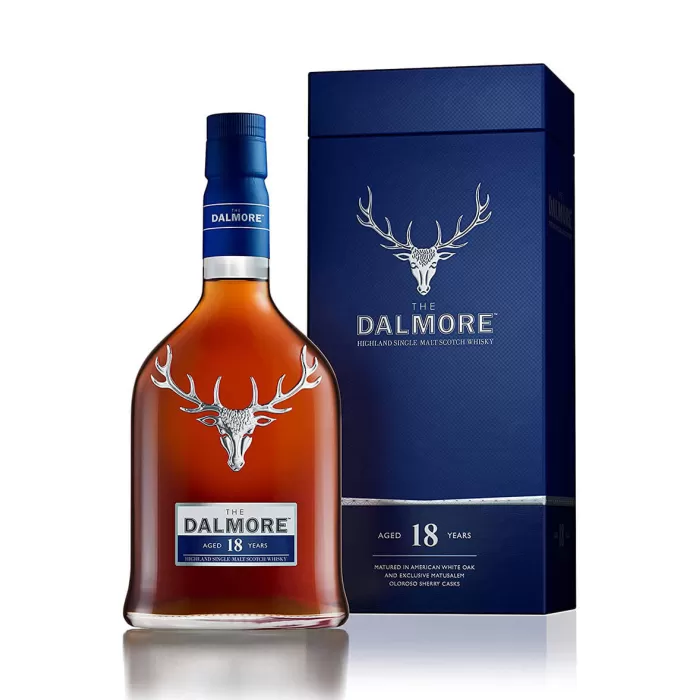
_(rec709)-700x700.webp "Dalmore 15 Year Old Single Malt")
-700x700h.webp "Bushmills 16 Year Old Single Malt")
-700x700h.webp "Suntory Hibiki Harmony Masters Select")
-700x700h.webp "Ro Red Romeiko")
-700x700h.webp "Blackwater Malt Na Mara Irish Poitin 20cl")